Crime fiction continues to satisfy wanderlust, both geographical and temporal. Curious about travel on a mysterious pilgrimage in medieval England? Pick up Karen Maitland's Company of Liars but watch out for wolves, and the plague! In the mood for a stroll along a canal in Venice? Donna Leon and her creation, Commissario Guido Brunetti, will be glad to accommodate. Stay for supper with Paola and the family.
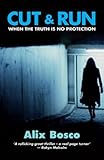
I have referred before to the outstanding blog Detectives Beyond Borders by Peter Rozovsky. In a recent posting, he was offering, as a prize, a copy of a new New Zealand novel featuring a middle-aged woman who is a researcher for a law firm, the mother of a recovering meth addict, and the widow of a man who killed himself coming to terms with this tragedy and her new situation in life. This is a "first novel", at least for the pseudonymous author "Alix Bosco", and apparently has generated much interest in New Zealand. There are plans to turn it into a television serial. It seems that the book, Cut and Run:When the Truth is No Protection, is now available through Amazon.
I haven't been to New Zealand but it has become an important place for my family. My daughter Emma attended university for a year there, lived and worked there after college, and is engaged to a Kiwi. I have taken to cheering for New Zealand in sporting events. I wear my Blackcaps cricket jersey with pride and that has led to at least one interesting conversation here in New York (I still know nothing about cricket but am loathe to admit as much, especially while wearing a Blackcaps jersey.)
My familiarity with the culture and place that is New Zealand is limited by my not having visited. I have pored over photographs, talked with my daughters about their trips, and have spent some time wondering if I should visit in the New Zealand summer or winter. I am ready for my trip.
So it was with some excitement that I noted the mention of this book in Detectives Beyond Borders. Emma was, in fact at that very time, spending time in New Zealand. I emailed her to request a copy of this book as my souvenir and now I have read it. I have had to construct my own interior geography of Auckland and environs to picture the scenes and settings and I can say that I have enjoyed both my literary sojourn and a thrilling mystery that seems very much a New Zealand experience.
There is much satisfaction in reading Cut and Run including a thoughtful, self-aware narrator who struggles to come to terms with uncertainty and ambiguity in her personal and professional life. She painfully processes the memory of her husband and the circumstances of his suicide even as she struggles with her love and support, and mistrust, of her recovering addict son. The contemporary urban Auckland setting, familiar to the Kiwi readers, was sufficiently exotic to this northern hemisphere reader.
Among English-speaking nations, strong similarities in language and culture can obscure significant differences in attitudes, behaviors, and outlook that are distinct. Reading Cut and Run reminded me that cross-cultural travel is not limited to cross-language travel.
Anna Markunis, the protagonist, loves nothing better than to kayak in the Auckland harbor. This gives Alix Bosco the canvas needed to describe the harbor, the wind, the waves, and the feel and light of a seaside location. From my limited (but memorable) experience in ocean kayaking, I was able to imagine how she felt on her early morning excursions.
I was especially delighted that late in the story there occurred a thrilling scene of conflict and danger set on Auckland harbor. It is enough to say here that it involves Anna alone in a kayak far off the shore fending off a helicopter intent on thoroughly slicing her up. Reading this kayak-helicopter duel was better than being at the movies, and I write this on a 103 degree day in New York when an air-conditioned movie theater and a box of popcorn is awfully attractive.
I appreciate an author who constructs a novel that entertains and sustains interest over the course of a well-developed story. It is an extra when such an author displays some narrative pyrotechnics that make me hold my breath, flip the pages, and wonder, "What next?" Cut and Run by Alix Bosco did that for me. I hope the television series is good. I think I would enjoy seeing it. You can bet that when I get to New Zealand, I will seek out the setting of the kayak-helicopter duel. Maybe they will have Anna Markunis tours.
Wednesday, July 7, 2010
Monday, June 21, 2010
The Ever-Present Bunny Menace
Note: Daisy Mae is a two-year old puppy, now resident in Ontario, Canada. She submits the occasional literary review to Bookwagon.
http://iamdaisymae.blogspot.com/2010/06/garden.html
Saturday, June 19, 2010
a garden
a garden is a very funny thing
sometimes you want to dig it up and then other times you do not want to dig it up
some things you want to make grow in it and other things you want to stop from growing in it
and then the plants that are "for eating" are the ones you are not allowed to eat
only my mama knows the exact rules
today after we gardened we read an exciting thriller full of suspense and intrigue
it is called The Tale of Peter Rabbit and it is about the ever-present bunny menace
stories are funny too because sometimes they confuse you about whose side you are on
imagination is when even though you do not want bunnies in your garden you do not really want Peter Rabbit to end up in a pie either
my mama says it is perfectly alright
sometimes you want to dig it up and then other times you do not want to dig it up
some things you want to make grow in it and other things you want to stop from growing in it
and then the plants that are "for eating" are the ones you are not allowed to eat
only my mama knows the exact rules
today after we gardened we read an exciting thriller full of suspense and intrigue
it is called The Tale of Peter Rabbit and it is about the ever-present bunny menace
stories are funny too because sometimes they confuse you about whose side you are on
imagination is when even though you do not want bunnies in your garden you do not really want Peter Rabbit to end up in a pie either
my mama says it is perfectly alright
http://iamdaisymae.blogspot.com/2010/06/garden.html
Sunday, June 13, 2010
Under Heaven
Straightforward curiosity accounts for much of my interest in history. What happened? What really happened? What may have happened that we don't know about? Who was involved? What did they do? How did they react? What was it really like?
Another reason behind my attraction to history is my affinity for "story." Narratives grab me. I always want to know what happens next, how does the story continue?
At the juncture of these two passions (curiosity and narrative) is historical fiction and I have always enjoyed and learned from this genre. I know really passionate historians who disdain historical fiction. I believe there are many writers and readers of literary fiction who do not respect historical fiction. Some historians complain that historical fiction presents "what-cannot-be-known" mixed with facts in ways that obscure or even deny the facts. The need for authors to sometimes distort time lines, blur details, blend real characters into fictional characters bothers historians. Readers of literary fiction, on the other hand, sometimes seem suspicious of the shaping of a narrative to accommodate historical events and characters. Perhaps they place a value on an author being able to create an entire world and not simply , in their view, place characters and action against an historic backdrop.
I am very comfortable with my appreciation for all three fields: history, historical fiction, and literary fiction. I am not exercised by those who for their own reasons don't fancy one, some, or any of these categories. I avoid disputes and arguments about them.
Now, however, I am challenged by another variant of history, or fiction, and I must come to terms with my feelings. Fantasy fiction has created narratives filled with adventure, conflict, characters that can transport the reader to worlds that seem more real than the one we live in. Tolkien's "Lord of the Rings," for example, or J.K. Rowling's "Harry Potter" are phenomenal, of course, and books like Philip Pullman's His Dark Materials series and anything by Neil Gaiman (I recommend American Gods) are among the best examples of what has become an entire section in bookstores. I engage these books with relish and again, hold nothing against other readers who don't get the attraction of a mystical element driving story.
Now, HB has lent me a novel that seems to be an amalgam of fantasy narrative and historical fiction. Under Heaven by Guy Gavriel Kay is actually the story of an important, well-known and fascinating period in China during the Tang Dynasty. The events presented include a famous rebellion, known as the An Lushan Rebellion, that resulted in perhaps the largest, most destructive war in human history until World War II. These events in the hands of a capable creator of fiction would create very satisfying and instructive narrative. This book, however, is not simply a fictional account of historical characters and events. In Under Heaven, Kay steps even further away from historical fiction by peopling his canvas with characters none of whom carry the exact identities of key historical figures and who are not assigned the names, the exact actions, or some of the known details of their lives. Even his geography is created in a "fantasy fiction" mode, with maps and details that represent but don't depict the actual geographical details that are well-known. Finally, with mystical elements significantly incorporated into the narrative, Kay takes creative history even further than conventional historical fiction can.
As I accepted the book, I worried that a book so removed from the facts of a period of Chinese history that I know well could prove dissatisfying or worse. You might guess, however, that as I began, I felt that the author was using a fresh approach to conveying real historical insights and understanding, even as he created a thrilling adventure with dynamic characters and much accurate detail. The emperor might have an assigned name, his concubine the same, the name of the capital might be changed and the supernatural comes to play, but the story is that of the aging Tang Dynasty emperor Xuanzong, his relationship with the beautiful courtesan Yang Guifei, and the fate of the empire as cultural, political and personal forces result in massive historical consequences.
The music and arts of the period are tightly woven into the story, as are the philosophy and mindset of the royalty, scholars, merchants, soldiers, and entertainers. One can read the history of all of this in great, and accurate detail, but reading this story brings these details to attention, and to life, in ways that breathe. One can read about the politics, sociology, and economics of this era elsewhere but by reading this story, the reader sees how these fields all come to bear and how individual lives reflected these dynamics. One can see ceramic horse sculptures from the Tang dynasty but in Under Heaven, one encounters the economic and military power of Sogdian horses and what it felt like to ride one. One can read real poems by real Tang Dynasty poets and come to appreciate their direct emotion and beauty. In Under Heaven, one will encounter fictional poets and fictional poetry that help make the reader feel how poets saw the world and how they expressed it to others.
This book reminded me of what this period of Chinese history has to offer us. I was inspired to review the actual history of the period. I realized how closely Kay actually follows real events even as he distances himself from "history." I am very impressed at his understanding of the period and he seems to resonate with the spirit of the times. I read his afterword carefully to garner clues about why he is interested in this period of Chinese history and how he learned as much as he has. I also began to wonder how others who like history, or historical fiction, or both feel about this different approach. I can imagine the range of reactions I might get from historians and fictionistas.
Guy Gavriel Kay is apparently the author of other well-received books in the fantasy genre. I am interested in reading more of his work. I have resisted looking into his earlier work until I wrote this review so that I would not be distracted from my direct impressions of reading this, his latest, book just out in hardcover. I owe much to HB whose appreciation for history and fiction is broad and who anticipated that I might enjoy this book even as he cautioned that it took a different approach to storytelling but wasn't "too heavy" on the mystical stuff.
Recently, PYZ and I attended a piano recital by a graduating high-school student. Among the pieces he chose to play was Chopin's Polonaise-Fantaise. In his program notes, he explained that in this piece, Chopin combines the structure and formality of the traditional Polonaise dance with the freedom and creativity of a musical fantasy to create something entirely new to the musical world at the time. He said that from the moment he first heard the opening notes, he knew that he wanted to play this piece of music. It occurs that Kay's book has done something of the same thing for me and I look forward to learning what others think.
Another reason behind my attraction to history is my affinity for "story." Narratives grab me. I always want to know what happens next, how does the story continue?
At the juncture of these two passions (curiosity and narrative) is historical fiction and I have always enjoyed and learned from this genre. I know really passionate historians who disdain historical fiction. I believe there are many writers and readers of literary fiction who do not respect historical fiction. Some historians complain that historical fiction presents "what-cannot-be-known" mixed with facts in ways that obscure or even deny the facts. The need for authors to sometimes distort time lines, blur details, blend real characters into fictional characters bothers historians. Readers of literary fiction, on the other hand, sometimes seem suspicious of the shaping of a narrative to accommodate historical events and characters. Perhaps they place a value on an author being able to create an entire world and not simply , in their view, place characters and action against an historic backdrop.
I am very comfortable with my appreciation for all three fields: history, historical fiction, and literary fiction. I am not exercised by those who for their own reasons don't fancy one, some, or any of these categories. I avoid disputes and arguments about them.
Now, however, I am challenged by another variant of history, or fiction, and I must come to terms with my feelings. Fantasy fiction has created narratives filled with adventure, conflict, characters that can transport the reader to worlds that seem more real than the one we live in. Tolkien's "Lord of the Rings," for example, or J.K. Rowling's "Harry Potter" are phenomenal, of course, and books like Philip Pullman's His Dark Materials series and anything by Neil Gaiman (I recommend American Gods) are among the best examples of what has become an entire section in bookstores. I engage these books with relish and again, hold nothing against other readers who don't get the attraction of a mystical element driving story.
Now, HB has lent me a novel that seems to be an amalgam of fantasy narrative and historical fiction. Under Heaven by Guy Gavriel Kay is actually the story of an important, well-known and fascinating period in China during the Tang Dynasty. The events presented include a famous rebellion, known as the An Lushan Rebellion, that resulted in perhaps the largest, most destructive war in human history until World War II. These events in the hands of a capable creator of fiction would create very satisfying and instructive narrative. This book, however, is not simply a fictional account of historical characters and events. In Under Heaven, Kay steps even further away from historical fiction by peopling his canvas with characters none of whom carry the exact identities of key historical figures and who are not assigned the names, the exact actions, or some of the known details of their lives. Even his geography is created in a "fantasy fiction" mode, with maps and details that represent but don't depict the actual geographical details that are well-known. Finally, with mystical elements significantly incorporated into the narrative, Kay takes creative history even further than conventional historical fiction can.
As I accepted the book, I worried that a book so removed from the facts of a period of Chinese history that I know well could prove dissatisfying or worse. You might guess, however, that as I began, I felt that the author was using a fresh approach to conveying real historical insights and understanding, even as he created a thrilling adventure with dynamic characters and much accurate detail. The emperor might have an assigned name, his concubine the same, the name of the capital might be changed and the supernatural comes to play, but the story is that of the aging Tang Dynasty emperor Xuanzong, his relationship with the beautiful courtesan Yang Guifei, and the fate of the empire as cultural, political and personal forces result in massive historical consequences.
The music and arts of the period are tightly woven into the story, as are the philosophy and mindset of the royalty, scholars, merchants, soldiers, and entertainers. One can read the history of all of this in great, and accurate detail, but reading this story brings these details to attention, and to life, in ways that breathe. One can read about the politics, sociology, and economics of this era elsewhere but by reading this story, the reader sees how these fields all come to bear and how individual lives reflected these dynamics. One can see ceramic horse sculptures from the Tang dynasty but in Under Heaven, one encounters the economic and military power of Sogdian horses and what it felt like to ride one. One can read real poems by real Tang Dynasty poets and come to appreciate their direct emotion and beauty. In Under Heaven, one will encounter fictional poets and fictional poetry that help make the reader feel how poets saw the world and how they expressed it to others.
This book reminded me of what this period of Chinese history has to offer us. I was inspired to review the actual history of the period. I realized how closely Kay actually follows real events even as he distances himself from "history." I am very impressed at his understanding of the period and he seems to resonate with the spirit of the times. I read his afterword carefully to garner clues about why he is interested in this period of Chinese history and how he learned as much as he has. I also began to wonder how others who like history, or historical fiction, or both feel about this different approach. I can imagine the range of reactions I might get from historians and fictionistas.
Guy Gavriel Kay is apparently the author of other well-received books in the fantasy genre. I am interested in reading more of his work. I have resisted looking into his earlier work until I wrote this review so that I would not be distracted from my direct impressions of reading this, his latest, book just out in hardcover. I owe much to HB whose appreciation for history and fiction is broad and who anticipated that I might enjoy this book even as he cautioned that it took a different approach to storytelling but wasn't "too heavy" on the mystical stuff.
Recently, PYZ and I attended a piano recital by a graduating high-school student. Among the pieces he chose to play was Chopin's Polonaise-Fantaise. In his program notes, he explained that in this piece, Chopin combines the structure and formality of the traditional Polonaise dance with the freedom and creativity of a musical fantasy to create something entirely new to the musical world at the time. He said that from the moment he first heard the opening notes, he knew that he wanted to play this piece of music. It occurs that Kay's book has done something of the same thing for me and I look forward to learning what others think.
Monday, May 24, 2010
Friday, May 14, 2010
The Barber of Piccadilly
The funniest author in the English language is P.G. Wodehouse, creator of many novels featuring hapless young man-about-town Bertie Wooster and his rational, calm, and protective valet Jeeves.
I don't make this statement lightly. I have read, and re-read Wooster and Jeeves novels for many decades now I am familiar with both those who appreciate Wodehouse's particular genius and those who find him amusing, perhaps, but also somehow trivial, superficial, or even worse, problematic. I understand that to discuss how funny these books are is also to open to scrutiny issues of class, history, entertainment, literature, and personal preference.
Over the years, I have had many conversations about why and how Wodehouse is just so funny to read, the latest at a New York bar where I was compelled to insert myself into a conversation going on next to me. I try to respect the view of those who do not find the works engaging or of those who are gently entertained by Wodehouse but not moved, as I am, to audible laughter on almost every page. Still, whenever I turn to a volume of his work to retreat from the world for a time, to relish the troubles that Bertie Wooster brings upon himself and to watch how Jeeves, through his keen intelligence and insight and with a few deft moves, resolves the problems for Bertie, I am quickly reconfirmed in my contention that the funniest author in the English language is P. G. Wodehouse.
There are those who care about either his sympathy for or his antipathy toward the gentry class of traditional English society. Some feel the unrealistic settings and vague time references interfere with enjoyment. There are those who feel that he doesn't draw realistic or sympathetic female characters. There are those who cannot follow, or are confused by the antic story lines and numerous plot twists.
A brief response on those issues: his stories are designed to be timeless and his success in attracting generations of readers speaks to his success in transcending time and era. The class conflict (or class consciousness or unconsciousness) that bothers some is only part of a stage set. The novels present themselves like a commedia dell'arte play, enjoyable precisely because the characters and scenarios are constant and recognizable and because the pleasure derives from each character playing out his or her individual role so exactly.
As to reality or dignity of female characters, I point out that none of the characters, including Wooster and Jeeves, is multidimensional and that some number of female characters bring admirable qualities of strength, intelligence and civilization to the stories. Bertie's formidable Aunt Dahlia and Aunt Agatha are key characters and deliver as much power, strength and fear as the books (and reader) can handle. On the other hand, pompous, timid or ineffectual men, whether husbands, friends, business associates, or political figures, are clearly cartoonish and quickly sketched. Again, they serve as props for irony, sarcasm, and mayhem.
The plots of these books are convoluted and confusing, but essentially they are the same in in each book. In the course of trying to enjoy life by going along the path of least resistance in just about everything, Bertie soon becomes tangled in a series of interlocking dilemmas that involve unwelcome romantic attention, broken friendships, and the threat of both social mortification and physical violence. There is always some physical scrambling about at country estates. Once you understand that you are anticipating everything that will happen, the story lines reveal themselves as excellent vehicles for the humor and insights Wodehouse delivers.
Amusing and effective though they are, it is not the plots that account for Wodehouse's genius. It is his language. Bertie Wooster, educated at Eton and Oxford, is somehow incapable of understanding the meaning of anything beyond a superficial level. Jeeves, on the other hand, seems to know and understand the motivations and inner workings of everyone with whom he is in contact. The less Wooster knows and understands, the more inclined he is to explain and comment. He is the narrator of the books and his language, ironically, is erudite, clever, complete with classical and contemporary cultural references, and a pleasure to read even though this eloquence only serves to highlight Wooster's ultimate opacity. Jeeves with his powerful intellect and strong character is a man of few words but whose pared-down utterances only reinforce his superiority.
Perhaps that is why I find the stories so funny. Narrated by Wooster, we see events play out clearly that Wooster doesn't see at all. We see characters and events as they are really happening and as Wooster is misperceiving them. We are given a view of the Wodehousian world through mainly through Wooster's narration and an occasional quoted dialogue with or utterance by Jeeves.
We also get to watch the story unfold from a safe perspective. We are reminded throughout that we need not worry or be concerned about real danger to Wooster's serenity and bachelorhood because behind him stands Jeeves very much in control. We are exposed to chaos with the knowledge that it won't ultimately harm. We can be entertained by the dilemmas and laugh with the confidence that all will work out.
There may be a spiritual or even theological dimension to Wodehouse's art. Wooster is good-hearted and affable. His problems are mostly of his own doing, compounded by levels of misunderstanding and misdirection. His very existence seems threatened by his clumsiness and ignorance. I identify. He seems to represent the human condition of good, but flawed, and he is constantly in need of rescue if not redemption. Humanity can never escape the consequences of original sin. Throughout it all Jeeves is present, like a guardian angel who finds it necessary or even amusing to allow situations and problems to snowball to the limits of tolerance before stepping in to set things right. This is not just funny, it is very satisfying to read repeatedly. Perhaps it is reassuring for us readers to recognize our own personal capacity for bungling and mismanagement and also for the faith that all can be made right eventually.
Wodehouse has amused and entertained readers for nearly a century, readers from countries, cultures, and backgrounds very different from the stylized and exaggerated British society of Wooster's world. This was a portrayal of a society that was already out-of-date when the stories were written. It is really a kind of "once-upon-a-time" that signals us to suspend any expectation for social reality and get right down to the business of laughing.
Wodehouse presents us with classic scenarios and highly stylized and recognizable character types who play out their roles exactly as we expect them to and want them to. I continue to compare the satisfaction of reading Wodehouse with watching commedia dell'arte or operatic productions. More than any other, the operas based on Beaumarchais stories that feature Count Almaviva, Rosine, and of course Figaro (The Barber of Seville and The Marriage of Figaro) demonstrate how humor, satire, and a great respect for the foibles of humanity are combined to create art that elicits laughter. In the case of Rossini and Mozart, the music infuses the stories with life and elevates the production. In Wodehouse's novels, language and narration serve that same function.
Whenever I hear the first notes of the overtures to Barber or Marriage, I immediately begin to smile and settle in for a sublime experience. The first lines of Wodehouse novel invariably do the same for me. They contain all of the familiarity, anticipation, and brilliance of the many sentences to follow and set the stage for a sublime reading experience.
I don't mind if you have read Wodehouse and feel differently than I do. If you agree with me, I do not expect you to risk a bar brawl by defending this position publicly. I do hope that if you are not familiar with Wodehouse and his iconic creations, Bertie Wooster and Jeeves, that you get one of these books in your hands, read the first sentence and flip through the pages settling here and there for a descriptive phrase or portion of dialogue. Then I challenge you to put the book down.
I recommend Jeeves and the Feudal Spirit as as an excellent introduction but almost any Wooster and Jeeves novel will serve.
I don't make this statement lightly. I have read, and re-read Wooster and Jeeves novels for many decades now I am familiar with both those who appreciate Wodehouse's particular genius and those who find him amusing, perhaps, but also somehow trivial, superficial, or even worse, problematic. I understand that to discuss how funny these books are is also to open to scrutiny issues of class, history, entertainment, literature, and personal preference.
Over the years, I have had many conversations about why and how Wodehouse is just so funny to read, the latest at a New York bar where I was compelled to insert myself into a conversation going on next to me. I try to respect the view of those who do not find the works engaging or of those who are gently entertained by Wodehouse but not moved, as I am, to audible laughter on almost every page. Still, whenever I turn to a volume of his work to retreat from the world for a time, to relish the troubles that Bertie Wooster brings upon himself and to watch how Jeeves, through his keen intelligence and insight and with a few deft moves, resolves the problems for Bertie, I am quickly reconfirmed in my contention that the funniest author in the English language is P. G. Wodehouse.
There are those who care about either his sympathy for or his antipathy toward the gentry class of traditional English society. Some feel the unrealistic settings and vague time references interfere with enjoyment. There are those who feel that he doesn't draw realistic or sympathetic female characters. There are those who cannot follow, or are confused by the antic story lines and numerous plot twists.
A brief response on those issues: his stories are designed to be timeless and his success in attracting generations of readers speaks to his success in transcending time and era. The class conflict (or class consciousness or unconsciousness) that bothers some is only part of a stage set. The novels present themselves like a commedia dell'arte play, enjoyable precisely because the characters and scenarios are constant and recognizable and because the pleasure derives from each character playing out his or her individual role so exactly.
As to reality or dignity of female characters, I point out that none of the characters, including Wooster and Jeeves, is multidimensional and that some number of female characters bring admirable qualities of strength, intelligence and civilization to the stories. Bertie's formidable Aunt Dahlia and Aunt Agatha are key characters and deliver as much power, strength and fear as the books (and reader) can handle. On the other hand, pompous, timid or ineffectual men, whether husbands, friends, business associates, or political figures, are clearly cartoonish and quickly sketched. Again, they serve as props for irony, sarcasm, and mayhem.
The plots of these books are convoluted and confusing, but essentially they are the same in in each book. In the course of trying to enjoy life by going along the path of least resistance in just about everything, Bertie soon becomes tangled in a series of interlocking dilemmas that involve unwelcome romantic attention, broken friendships, and the threat of both social mortification and physical violence. There is always some physical scrambling about at country estates. Once you understand that you are anticipating everything that will happen, the story lines reveal themselves as excellent vehicles for the humor and insights Wodehouse delivers.
Amusing and effective though they are, it is not the plots that account for Wodehouse's genius. It is his language. Bertie Wooster, educated at Eton and Oxford, is somehow incapable of understanding the meaning of anything beyond a superficial level. Jeeves, on the other hand, seems to know and understand the motivations and inner workings of everyone with whom he is in contact. The less Wooster knows and understands, the more inclined he is to explain and comment. He is the narrator of the books and his language, ironically, is erudite, clever, complete with classical and contemporary cultural references, and a pleasure to read even though this eloquence only serves to highlight Wooster's ultimate opacity. Jeeves with his powerful intellect and strong character is a man of few words but whose pared-down utterances only reinforce his superiority.
Perhaps that is why I find the stories so funny. Narrated by Wooster, we see events play out clearly that Wooster doesn't see at all. We see characters and events as they are really happening and as Wooster is misperceiving them. We are given a view of the Wodehousian world through mainly through Wooster's narration and an occasional quoted dialogue with or utterance by Jeeves.
We also get to watch the story unfold from a safe perspective. We are reminded throughout that we need not worry or be concerned about real danger to Wooster's serenity and bachelorhood because behind him stands Jeeves very much in control. We are exposed to chaos with the knowledge that it won't ultimately harm. We can be entertained by the dilemmas and laugh with the confidence that all will work out.
There may be a spiritual or even theological dimension to Wodehouse's art. Wooster is good-hearted and affable. His problems are mostly of his own doing, compounded by levels of misunderstanding and misdirection. His very existence seems threatened by his clumsiness and ignorance. I identify. He seems to represent the human condition of good, but flawed, and he is constantly in need of rescue if not redemption. Humanity can never escape the consequences of original sin. Throughout it all Jeeves is present, like a guardian angel who finds it necessary or even amusing to allow situations and problems to snowball to the limits of tolerance before stepping in to set things right. This is not just funny, it is very satisfying to read repeatedly. Perhaps it is reassuring for us readers to recognize our own personal capacity for bungling and mismanagement and also for the faith that all can be made right eventually.
Wodehouse has amused and entertained readers for nearly a century, readers from countries, cultures, and backgrounds very different from the stylized and exaggerated British society of Wooster's world. This was a portrayal of a society that was already out-of-date when the stories were written. It is really a kind of "once-upon-a-time" that signals us to suspend any expectation for social reality and get right down to the business of laughing.
Wodehouse presents us with classic scenarios and highly stylized and recognizable character types who play out their roles exactly as we expect them to and want them to. I continue to compare the satisfaction of reading Wodehouse with watching commedia dell'arte or operatic productions. More than any other, the operas based on Beaumarchais stories that feature Count Almaviva, Rosine, and of course Figaro (The Barber of Seville and The Marriage of Figaro) demonstrate how humor, satire, and a great respect for the foibles of humanity are combined to create art that elicits laughter. In the case of Rossini and Mozart, the music infuses the stories with life and elevates the production. In Wodehouse's novels, language and narration serve that same function.
Whenever I hear the first notes of the overtures to Barber or Marriage, I immediately begin to smile and settle in for a sublime experience. The first lines of Wodehouse novel invariably do the same for me. They contain all of the familiarity, anticipation, and brilliance of the many sentences to follow and set the stage for a sublime reading experience.
I don't mind if you have read Wodehouse and feel differently than I do. If you agree with me, I do not expect you to risk a bar brawl by defending this position publicly. I do hope that if you are not familiar with Wodehouse and his iconic creations, Bertie Wooster and Jeeves, that you get one of these books in your hands, read the first sentence and flip through the pages settling here and there for a descriptive phrase or portion of dialogue. Then I challenge you to put the book down.
I recommend Jeeves and the Feudal Spirit as as an excellent introduction but almost any Wooster and Jeeves novel will serve.
Thursday, April 29, 2010
A Fairy Tale
Dinnie, an overweight enemy of humanity, was the worst violinist in New York, but was practicing gamely when two cute little fairies stumbled through his fourth- floor window and vomited on the carpet.
"Sorry," said one.
"Don't worry," said the other. "Fairy vomit is no doubt sweet-smelling to humans."
(From The Good Fairies of New York by Martin Millar)
New York City, early 1990s, Lower East Side, at that time still the gritty and dangerous neighborhood that nurtured the punk rock music scene in the US. Think Rent.
Heather MacKintosh and Morag MacPherson, thistle fairies from rival clans who have become bickering friends, have fled Scotland to escape a band of fairies from the MacLeod clan because they have somehow offended the MacLeods by unwittingly mutilating an historic banner. Expert fiddlers in the traditional Scottish tradition, both claim to be the best fiddler in Scotland and compete for bragging rights. New York City will allow them to stretch their boundaries. They befriend antisocial, overweight Dinnie (referenced above as the worst violinist in New York) and a young woman named Kerry and in well-meaning attempts to help each of these humans with some very real challenges, experience a series of mishaps and adventures. They also manage to stir up local fairies including rival bands from Chinatown, Little Italy, and Harlem.
Our protagonists antagonized fellow fairies in the old country by playing garage-punk versions of Scottish reels and wearing torn kilts. They are using their East Village sojourn to learn to play guitar solos by the Ramones and the New York Dolls on their fiddles. There is even a search for a lost 1958 Gibson Tiger Top guitar on behalf of the ghost of Johnny Thunders.
They experience New York with all of its charm, eccentricity and color as well as its drug culture, poverty and underlying presence of violence. They drink plenty, offer illuminating observations on New York culture and behavior, and engage the contemporary music world even as they share Scottish fiddle tunes and musical lore with their new friends. There is a threatening army of Cornish fairies led by the Tala, the Fairy King of Cornwall. A community production of Midsummer Night's Dream presents an opportunity from some real fairy versus human fairy slapstick. A homeless woman named Magenta thinks she is leading a legion of ancient Greek hoplites in military maneuvers against the Persians as she wanders about the neighborhoods of New York.
If what I have described hear appeals or amuses, you are a good candidate for enjoying The Good Fairies of New York. If on the other hand, you are not the kind of reader who appreciates the suggestion that fairy vomit might be sweet-smelling to humans, or who does not see the wonderful congruity between Scottish reels and the Ramones, you will need to approach with caution or stay away entirely.
The 2006 edition by Soft Skull Press, issued nearly fifteen years after the book was written, contains an introduction by Neil Gaiman that qualifies as a model for literary appreciation. This introduction is worth the price of the book itself. Gaiman concludes:
This is a book for every fiddler who has realised, half-way through playing an ancient Scottish air, that the Ramones, "I Wanna Be Sedated" is what folk music is all about, and gone straight into it. It's a book for every girl with home-dyed hair and fairy wings who can't honestly remember what happened last night. It's a book for people of whatever shape and size who like reading good books.
I owned it for more than five years before reading it, then lent my copy to someone I thought should read it, and never got it back. Do not make either of my mistakes. Read it now and then make your friends buy their own copies. You'll thank me one day.
One more selection, this time by Heather MacIntosh in the way of a denouement:
Meanwhile we are off for a few drams and a bit of serious fiddling. If the Irish and everyone else think they've heard Scottish music at its best just because Wee Maggie MacGowan managed to struggle through a few simple tunes without making any mistakes they have a lot to learn.
Collum MacHardie has promised to make us some amplifiers. When our radical Celtic band gets going, the hills and glens will never be the same.
Note: this book deserves a soundtrack and perhaps I can enlist some help in creating one.
"Sorry," said one.
"Don't worry," said the other. "Fairy vomit is no doubt sweet-smelling to humans."
(From The Good Fairies of New York by Martin Millar)
New York City, early 1990s, Lower East Side, at that time still the gritty and dangerous neighborhood that nurtured the punk rock music scene in the US. Think Rent.Heather MacKintosh and Morag MacPherson, thistle fairies from rival clans who have become bickering friends, have fled Scotland to escape a band of fairies from the MacLeod clan because they have somehow offended the MacLeods by unwittingly mutilating an historic banner. Expert fiddlers in the traditional Scottish tradition, both claim to be the best fiddler in Scotland and compete for bragging rights. New York City will allow them to stretch their boundaries. They befriend antisocial, overweight Dinnie (referenced above as the worst violinist in New York) and a young woman named Kerry and in well-meaning attempts to help each of these humans with some very real challenges, experience a series of mishaps and adventures. They also manage to stir up local fairies including rival bands from Chinatown, Little Italy, and Harlem.
Our protagonists antagonized fellow fairies in the old country by playing garage-punk versions of Scottish reels and wearing torn kilts. They are using their East Village sojourn to learn to play guitar solos by the Ramones and the New York Dolls on their fiddles. There is even a search for a lost 1958 Gibson Tiger Top guitar on behalf of the ghost of Johnny Thunders.
They experience New York with all of its charm, eccentricity and color as well as its drug culture, poverty and underlying presence of violence. They drink plenty, offer illuminating observations on New York culture and behavior, and engage the contemporary music world even as they share Scottish fiddle tunes and musical lore with their new friends. There is a threatening army of Cornish fairies led by the Tala, the Fairy King of Cornwall. A community production of Midsummer Night's Dream presents an opportunity from some real fairy versus human fairy slapstick. A homeless woman named Magenta thinks she is leading a legion of ancient Greek hoplites in military maneuvers against the Persians as she wanders about the neighborhoods of New York.
If what I have described hear appeals or amuses, you are a good candidate for enjoying The Good Fairies of New York. If on the other hand, you are not the kind of reader who appreciates the suggestion that fairy vomit might be sweet-smelling to humans, or who does not see the wonderful congruity between Scottish reels and the Ramones, you will need to approach with caution or stay away entirely.
The 2006 edition by Soft Skull Press, issued nearly fifteen years after the book was written, contains an introduction by Neil Gaiman that qualifies as a model for literary appreciation. This introduction is worth the price of the book itself. Gaiman concludes:
This is a book for every fiddler who has realised, half-way through playing an ancient Scottish air, that the Ramones, "I Wanna Be Sedated" is what folk music is all about, and gone straight into it. It's a book for every girl with home-dyed hair and fairy wings who can't honestly remember what happened last night. It's a book for people of whatever shape and size who like reading good books.
I owned it for more than five years before reading it, then lent my copy to someone I thought should read it, and never got it back. Do not make either of my mistakes. Read it now and then make your friends buy their own copies. You'll thank me one day.
One more selection, this time by Heather MacIntosh in the way of a denouement:
Meanwhile we are off for a few drams and a bit of serious fiddling. If the Irish and everyone else think they've heard Scottish music at its best just because Wee Maggie MacGowan managed to struggle through a few simple tunes without making any mistakes they have a lot to learn.
Collum MacHardie has promised to make us some amplifiers. When our radical Celtic band gets going, the hills and glens will never be the same.
Note: this book deserves a soundtrack and perhaps I can enlist some help in creating one.
Wednesday, April 21, 2010
New York is Book Country
On a recent sunny Sunday, PYZ and I had finished a noonish brunch at the Indian Road Cafe in Inwood and a quick browse through the little antique cum used books shop next door before continuing on a walk through Inwood Park when an excited woman waving a hardcover book approached a couple nearby and exclaimed, "Have you seen my new book! It just came out!" As she stopped to show off her newly published creation, I glanced at the cover to note the title and author. Rude, perhaps, or perhaps a little impertinent to insert myself into their interaction but she had made something of a public announcement.
I scuttled to catch up with PYZ and explained to her that this woman had just had a book published and I had captured title and author and might research it just to see if her excitement was justified. This is called guerrilla reviewing.
PYZ, ever so much more commonsensible than I, asked why I hadn't just stayed and talked with her and with that slight breeze of encouragement, I turned around and walked back to the group and politeley inquired, "So, you just had a book published? What's it about?"
In that way, we found ourselves in an engaging conversation with Hyah Leah Molnar about her new memoir, Under a Red Sky, a memoir that shares her experience growing up in Communist Romania after World War II.
The book is about her childhood and adolescence and her memory of her family experiences but was not written specifically for the "young adult" genre. Her editor and publishers help make a decision to market it as such (enhancing some marketing opportunities and shutting off some others) and our conversation turned to "young adult" literature and some of the artificiality of the distinction, something that has occupied my thoughts for some time.
If you haven't read Sherman Alexie's Absolutely True Diary of a Part-time Indian or Markus Zusak's The Book Thief, I encourage you to do so to experience examples of books that may be marketed as "young adult" but that defy the label and deserve to be read simply for what they offer any reader lucky enough to be introduced to them. Should Wind in the Willows or Alice in Wonderland be found only in the adolescent sections of libraries or in children's departments of bookstores? (This last question, by the way, is rhetorical.)
We continued our conversation on the significance of the development of individual, family and cultural identies, and the mechanics of writing and publishing, and left having exchanged emails and website information. Subsequent web research on her book suggests that it is worthy of her excitement that day and perhaps I will read it and report some time.
Later that evening, before settling in for Sunday evening showing of The Pacific, we ambled over to an Irish pub in our neighborhood that features live Irish music on Sunday evenings. We settled in at the bar for Guinness and a view of the band. Sitting next to us was a woman nursing a beer, intent on reading a book opened up in front of her. Neither the beer, the bar conversation nor the lively music of an accordion, a fiddle, a guitar and drums seemed to intrude on her concentration.
Eventually she ordered a second beer and disappeared for some time outside where other customers were seated, but she had left the book at her place at the bar. I was curious but did not reach over to see the title. When some acquaintances spotted us at the bar, they moved to join us and eyed the empty seat. We explained that a patron had recently occupied that seat and still had her book there but whether that meant she had abandoned her space was unclear. Our friends temporarily took over the barstool and after some long time, the woman reappeared.
All necessary and appropriate words of apology and deferral were made by both parties, with the clear understanding that any barstool left unoccupied that long was actually fair territory, and she said that she had relocated outside but had only returned to reclaim her book. At that time, she showed us the book, Brick Lane by Monica Ali, and explained that she had become so enraptured that she couldn't resist reading it even in this social environment. We proceeded to have an interesting discussion about the book which some of us had read and she proceeded to read a passage aloud to share her enthusiasm for Ali's writing. We are huddled in a crowded bar, filled with happy, drinking and loud customers, with an Irish band going full tilt, unselfconsciously listening to a book reading by a woman standing next to us!
On the stroll home I shared both my wonder and my gratitude that I lived in a city where books are present, common, and important enough to be included in the fabric of everyday experience. I hadn't even browsed a bookstore and had still enjoyed a spontaneous and literary Sunday, complete with a walk in the park and Guinness!
I scuttled to catch up with PYZ and explained to her that this woman had just had a book published and I had captured title and author and might research it just to see if her excitement was justified. This is called guerrilla reviewing.
PYZ, ever so much more commonsensible than I, asked why I hadn't just stayed and talked with her and with that slight breeze of encouragement, I turned around and walked back to the group and politeley inquired, "So, you just had a book published? What's it about?"
In that way, we found ourselves in an engaging conversation with Hyah Leah Molnar about her new memoir, Under a Red Sky, a memoir that shares her experience growing up in Communist Romania after World War II.
The book is about her childhood and adolescence and her memory of her family experiences but was not written specifically for the "young adult" genre. Her editor and publishers help make a decision to market it as such (enhancing some marketing opportunities and shutting off some others) and our conversation turned to "young adult" literature and some of the artificiality of the distinction, something that has occupied my thoughts for some time.
If you haven't read Sherman Alexie's Absolutely True Diary of a Part-time Indian or Markus Zusak's The Book Thief, I encourage you to do so to experience examples of books that may be marketed as "young adult" but that defy the label and deserve to be read simply for what they offer any reader lucky enough to be introduced to them. Should Wind in the Willows or Alice in Wonderland be found only in the adolescent sections of libraries or in children's departments of bookstores? (This last question, by the way, is rhetorical.)
We continued our conversation on the significance of the development of individual, family and cultural identies, and the mechanics of writing and publishing, and left having exchanged emails and website information. Subsequent web research on her book suggests that it is worthy of her excitement that day and perhaps I will read it and report some time.
Later that evening, before settling in for Sunday evening showing of The Pacific, we ambled over to an Irish pub in our neighborhood that features live Irish music on Sunday evenings. We settled in at the bar for Guinness and a view of the band. Sitting next to us was a woman nursing a beer, intent on reading a book opened up in front of her. Neither the beer, the bar conversation nor the lively music of an accordion, a fiddle, a guitar and drums seemed to intrude on her concentration.
Eventually she ordered a second beer and disappeared for some time outside where other customers were seated, but she had left the book at her place at the bar. I was curious but did not reach over to see the title. When some acquaintances spotted us at the bar, they moved to join us and eyed the empty seat. We explained that a patron had recently occupied that seat and still had her book there but whether that meant she had abandoned her space was unclear. Our friends temporarily took over the barstool and after some long time, the woman reappeared.
All necessary and appropriate words of apology and deferral were made by both parties, with the clear understanding that any barstool left unoccupied that long was actually fair territory, and she said that she had relocated outside but had only returned to reclaim her book. At that time, she showed us the book, Brick Lane by Monica Ali, and explained that she had become so enraptured that she couldn't resist reading it even in this social environment. We proceeded to have an interesting discussion about the book which some of us had read and she proceeded to read a passage aloud to share her enthusiasm for Ali's writing. We are huddled in a crowded bar, filled with happy, drinking and loud customers, with an Irish band going full tilt, unselfconsciously listening to a book reading by a woman standing next to us!
On the stroll home I shared both my wonder and my gratitude that I lived in a city where books are present, common, and important enough to be included in the fabric of everyday experience. I hadn't even browsed a bookstore and had still enjoyed a spontaneous and literary Sunday, complete with a walk in the park and Guinness!
Subscribe to:
Posts (Atom)


